Recent rain events had destroyed road access to Milford Sound. Much of the interior of Fiordland National Park from the front-country is access from the Te Anau – Milford Sound Road. Many of the tourist who were planning to go to visit the fiords were unable to go to Milford Sound and were redirected to the Doubtful Sound.
We had planned to go to Doubtful Sound, as we had already visited Milford Sound four years ago. The kayaking was excellent there but we wanted a new experience. All the visitors redirected to Doubtful Sound were clearly going to be an issue. Bron got searching for a solution and discovered a hostel in the wilderness for us. We made arrangements to stay at Wilmot Lodge in Deep Cove at the top of Doubtful Sound.
It was perfection! We still had the cruise experience on Doubtful, but had two nights stay in the wilderness. Our first night we stayed with two other guests. The last night we were all alone! More about that in a few minutes…
February 23 – We departed Te Anau to meet the ferry to West Arm in Manapōuri for a noon departure. The weather was really sunny and warm.

Crossing Lake Manapōuri to West Arm, the boat operator explained the lake was a large hydroelectric reservoir. At West Arm, seven vertical tunnels were developed to draw water down to an underground power station 180m below the lake. A further 10 kilometres of tunnels ran out to Doubtful Sound to expel the water after the turbines. 510 cubic metres of water pass through the power plant every second.
The hydroelectric station produces 850MW and was originally desired for feed to the Rio Tinto aluminium smelter at Bluff, NZ. For the reference of our friends in Lab City – This power station is only about a sixth of the size of Churchill Falls.
Arriving in West Arm, we boarded coaches to cross over Wilmot Pass and descend to sea level at Doubtful Sound. The road is only 21 kilometres long. It has the distinctions of being: 1/ the steepest road in the country, with individual sections of 20%, 2/ the most costly road in the country, reportedly with a cost of $5 per inch of running length ($4.1M in 1960s), and 3/ it is completely disconnected from the remainder of the public road network entirely. Impresssive – Oh yeah, and it only rains just shy of 10 metres of rainfall per year at the summit!
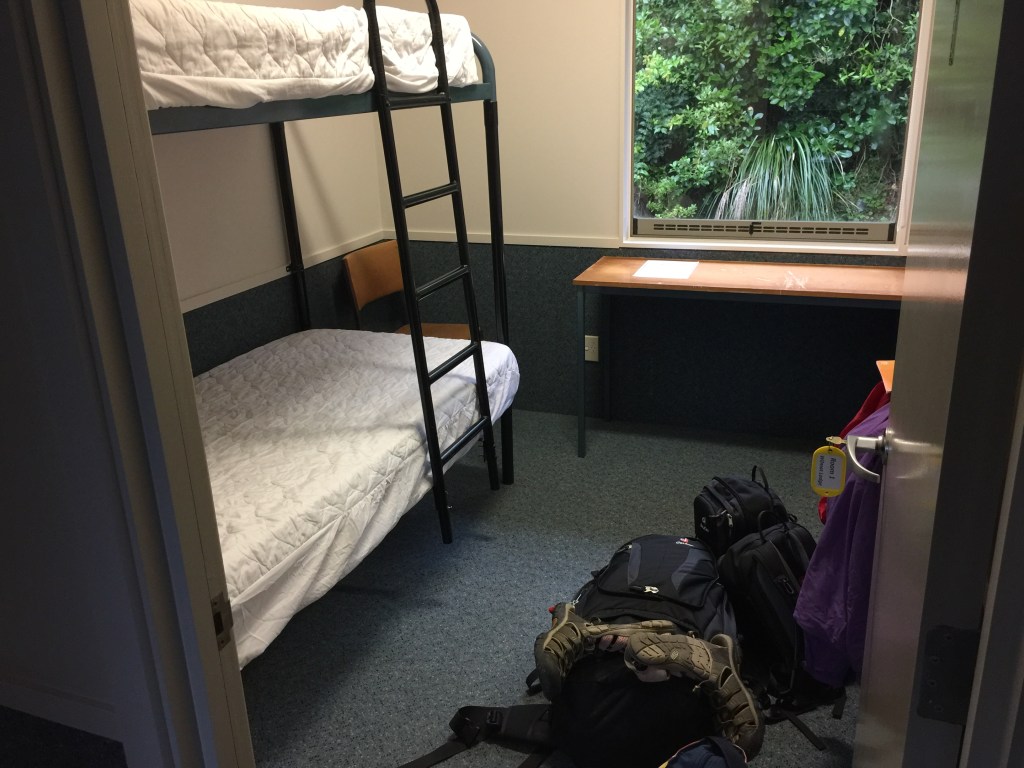
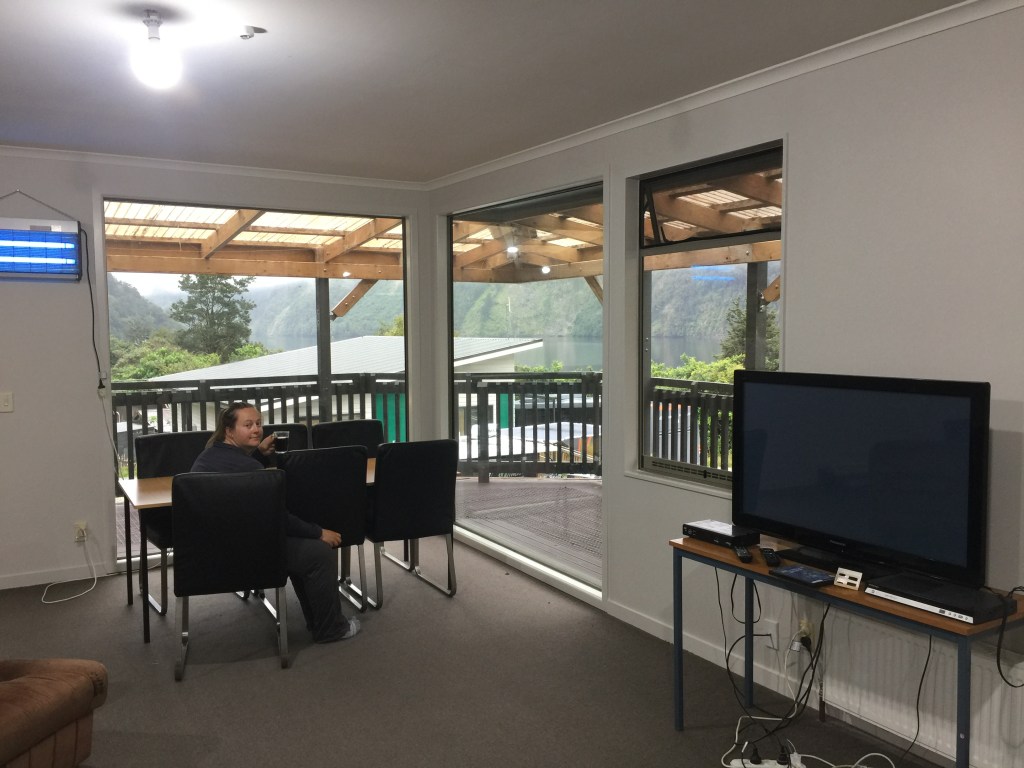
After the 40 minute drive over Wilmot Pass, we arrived at the pier. The other passengers on the bus prepared for their overnight cruise into Doubtful Sound. We proceeded to our hostel a few hundred metres back up the road. When we arrived we were met by the caretaker who showed us our room. A single set of bunk beds, down the hall from the washrooms and showers. Simple. Clean. Dead quiet. The hostel had a huge common kitchen with a pair of stoves – one electric stove, and one gas stove, an upright freezer, and large refrigerator. There was also a comfy leather couch and a few easy chairs in front of the TV with satellite receiver. The views were fantastic. Overall – really good, considering the cost was $60 a night.

Across the road there was another building that was used for housing school children who are sent up to Doubtful Sound for Outdoor Education experiences. Nicely equipped with kayaks, adventure courses, and hiking trails this area of the park is an immense outdoor playground. We did not see the kids staying over there very often – just when they were coming in to be fed, I think.
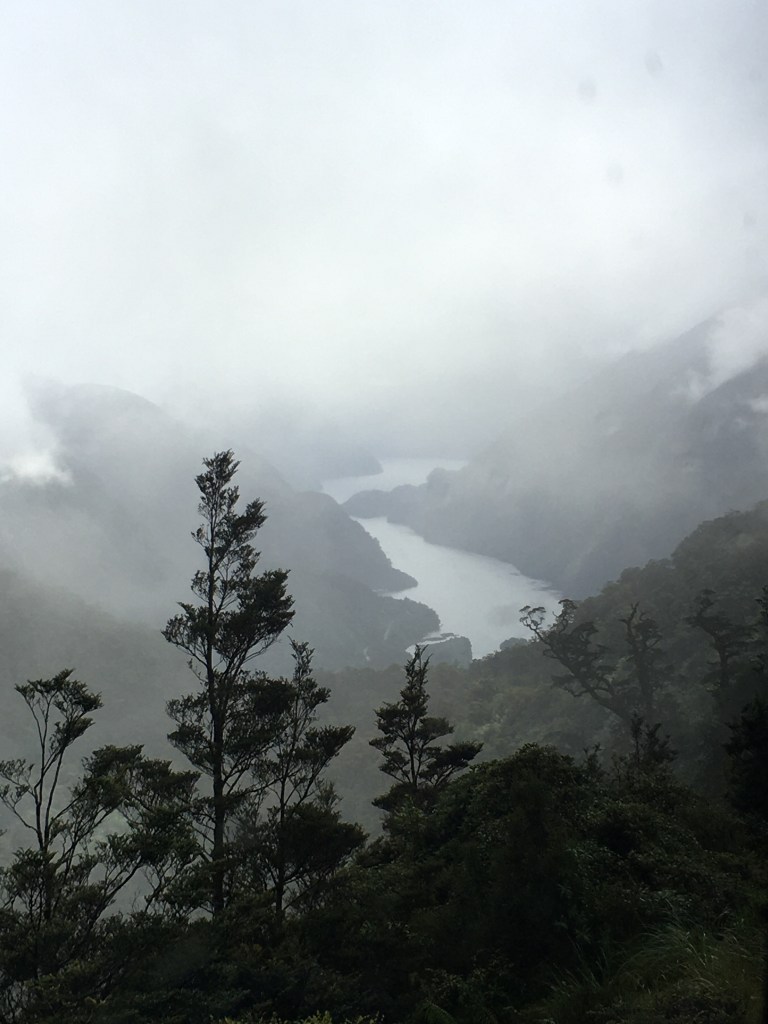
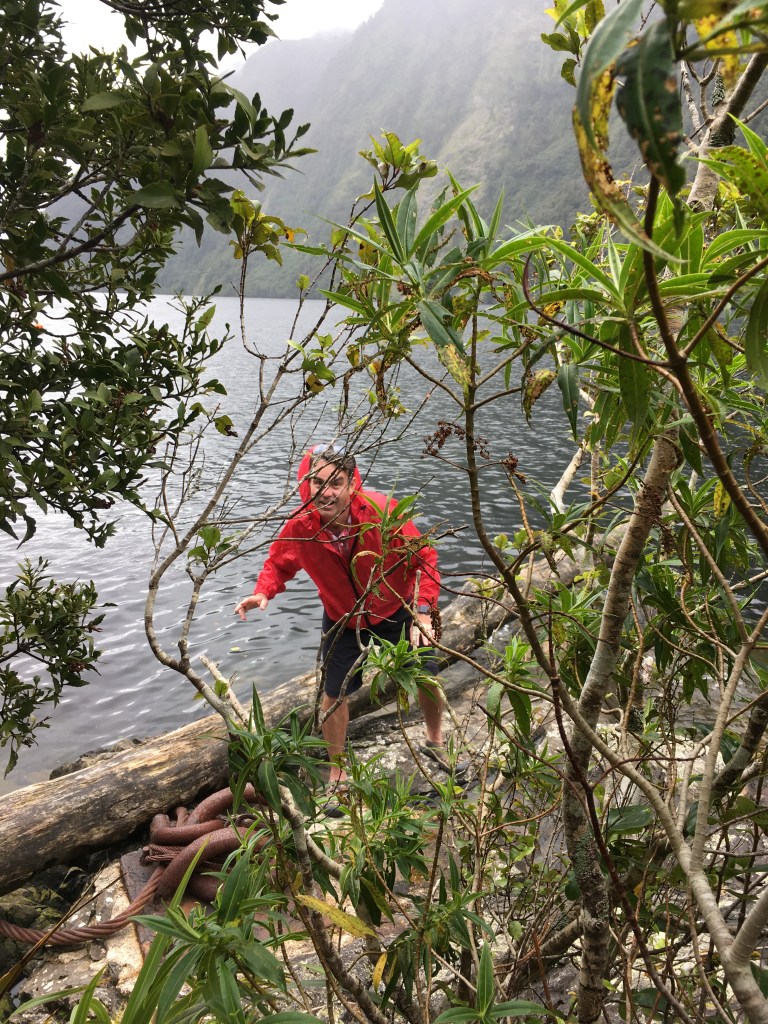
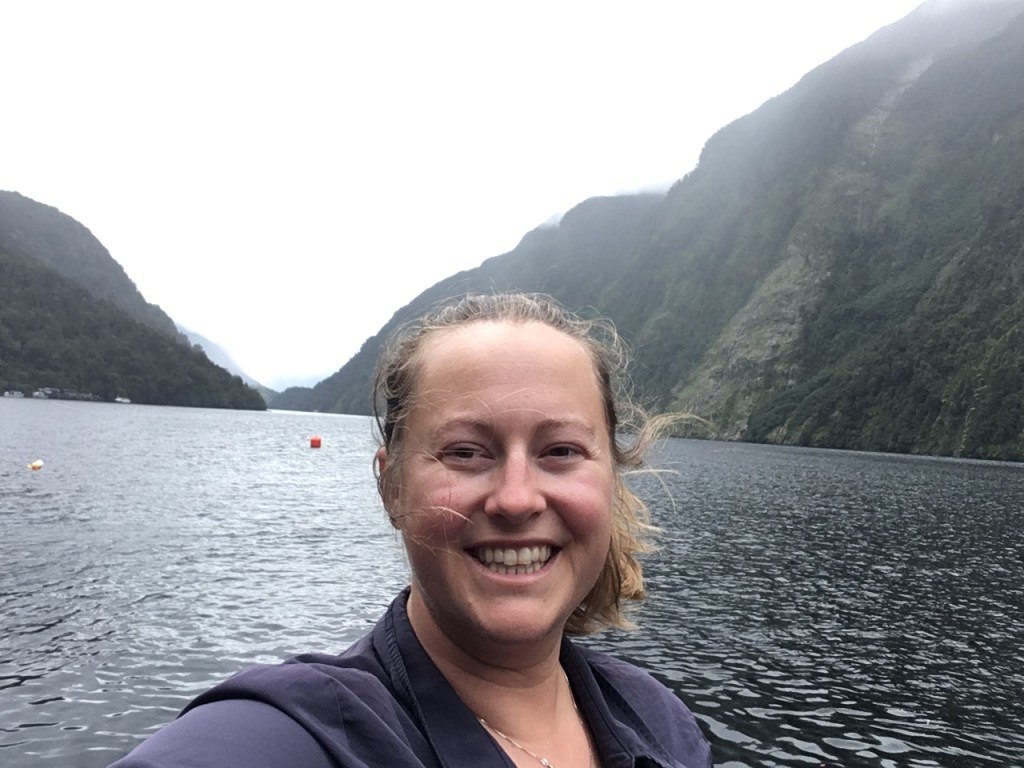
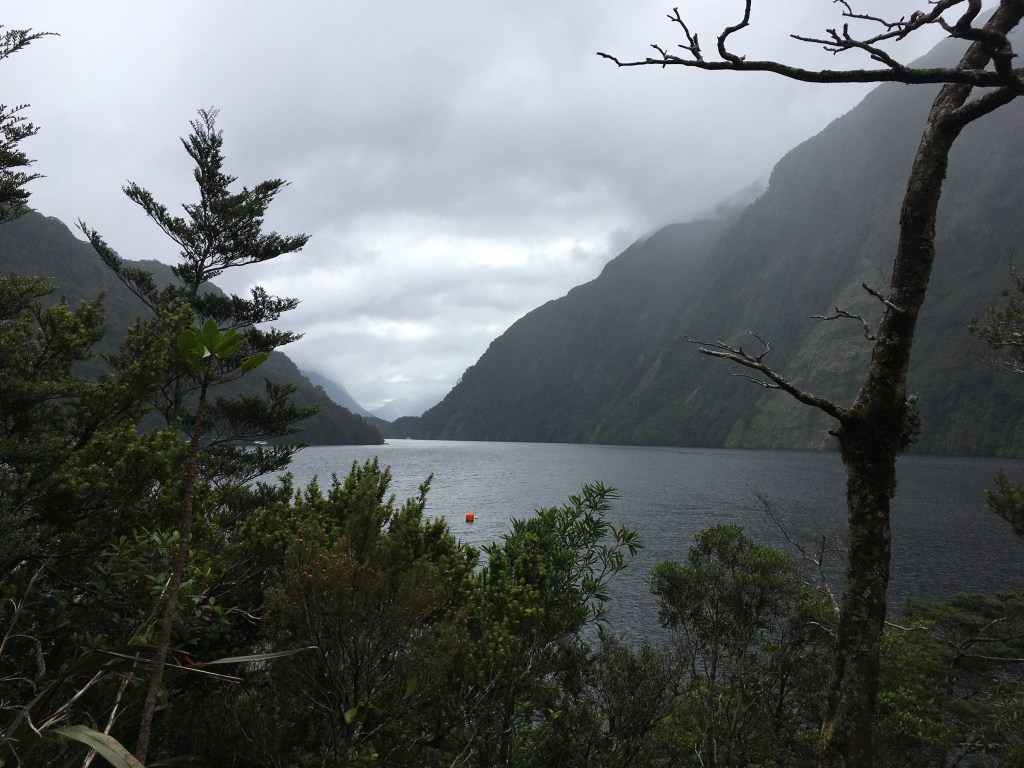
We set out to explore a bit before dinner. There was a nice walking trail starting off from the building where the school kids were being housed. The trail was rooty, and rocky. We climbed down to the water’s edge and got our first really good look at Doubtful Sound.
Returning to the Lodge, we met two kayakers who just pulled up from the water. They had been out paddling for the past 14 days. They were looking for a place to dry out before they got ready to head home. We visited with them as we all prepared and ate dinner in the common area.
After dinner, we were joined by some fishermen who were using using the kitchen at the Lodge. They pulled up to the table with us with some snacks and beer and joined our conversation. Some fish tales were told, and the night was really quite entertaining. We all settled down for bed well after our regular bedtime.
February 24 – Cruise day. We have been very fortunate to have had some great weather throughout our trip so far. It isn’t sunny in Doubtful Sound very often and rains 2 days out of 3. We gather that the dry days are also gloomy. We had a sunny day for our trip. Staying at the hostel we arrived at the boat launch 15 minutes early and the skipper invited us to board. This meant we got to enjoy a coffee and pick the best spots on the boat before the bus people arrived – score!
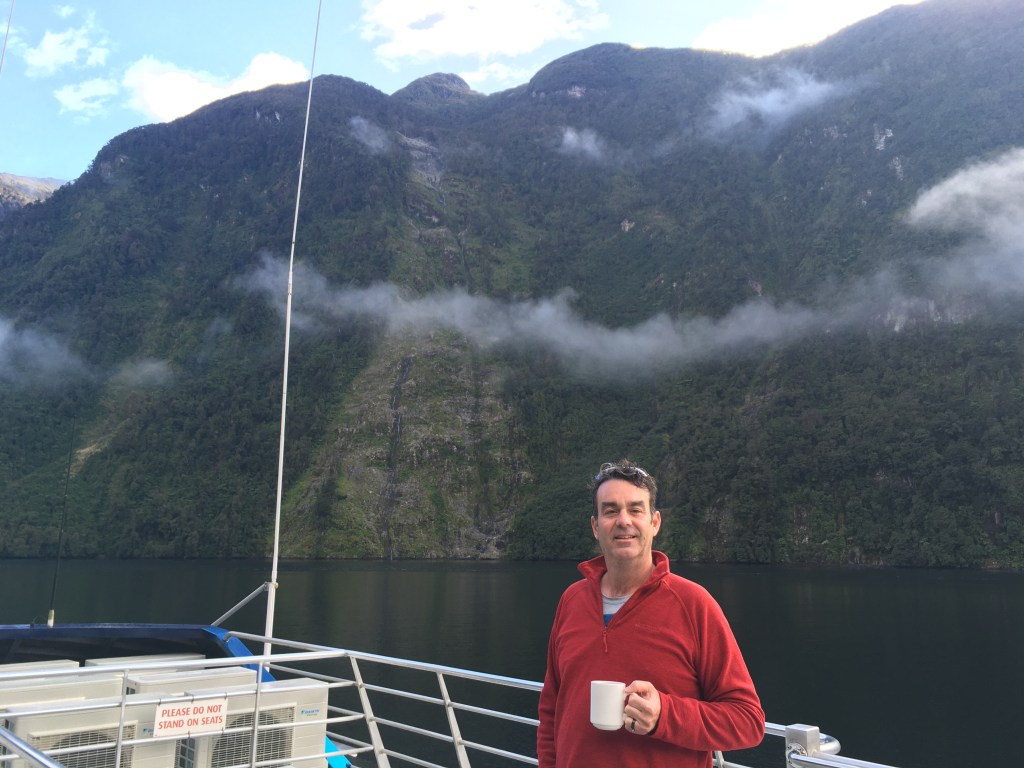

Bottlenose Dolphins, New Zealand Fur Seals, and Red Deer were all spotted during our trip. It was amazing to see the quantity of wildlife.


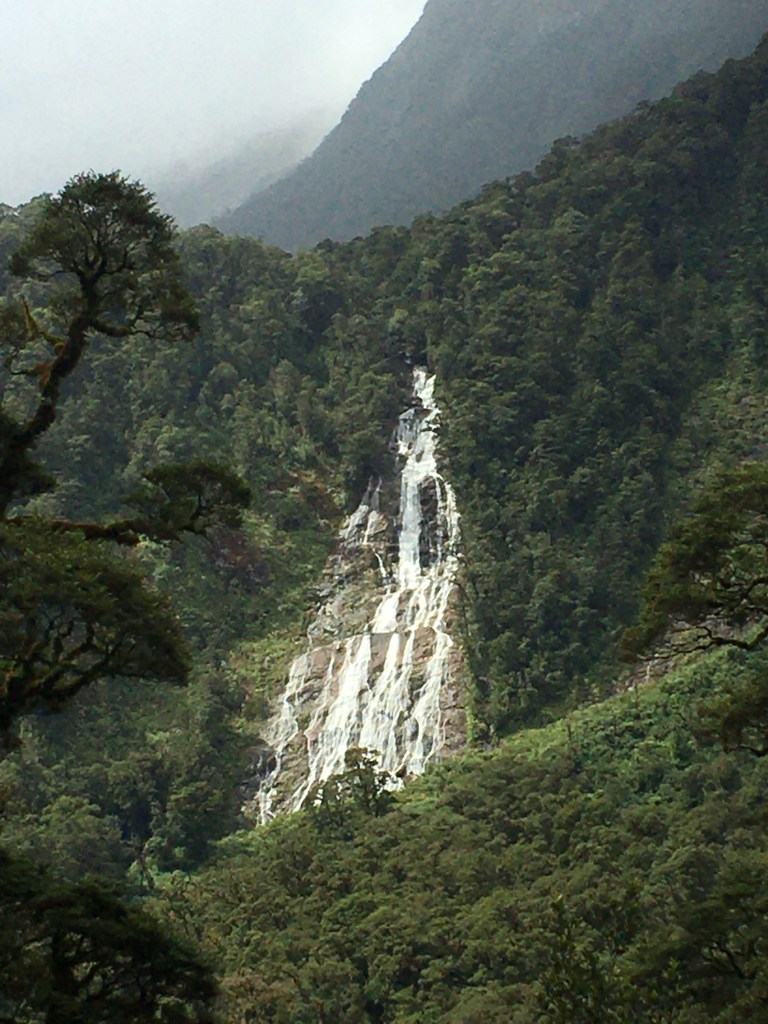
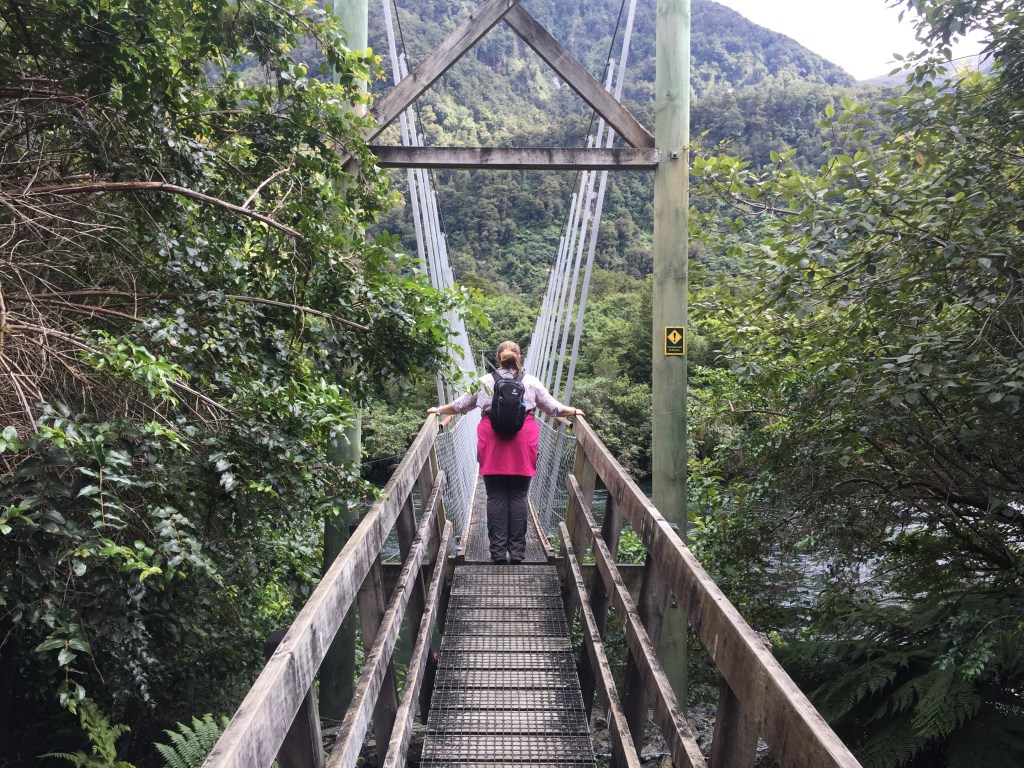
After the cruise, and a bite of lunch, we set out again for a hike to Helena Falls – across the valley from the Lodge. The walk was about 7 kilometres round trip including side exploration. The area we are in is very geologically active, and there were signs of the changes all around us – including this slip that dropped out in the past week.

The walk was very nice and we experienced the rainforest without all the snakes and creepy crawlies that love to call the rainforest home.


On our way back to the Lodge from our hike, we stopped in to see the tailrace tunnels from the Manapōuri Powerstation. We were able to see the 10m diameter tunnel that was bored in the 2002 upgrades at the powerstation.


Bron had not had enough and proceeded to climb the mountain behind the Lodge, while Brent prepared some spaghetti sauce for dinner. Bron headed off on the trail that was 2km return and ascended 400m. She describes climbing root ladders and scrambling over rocks.
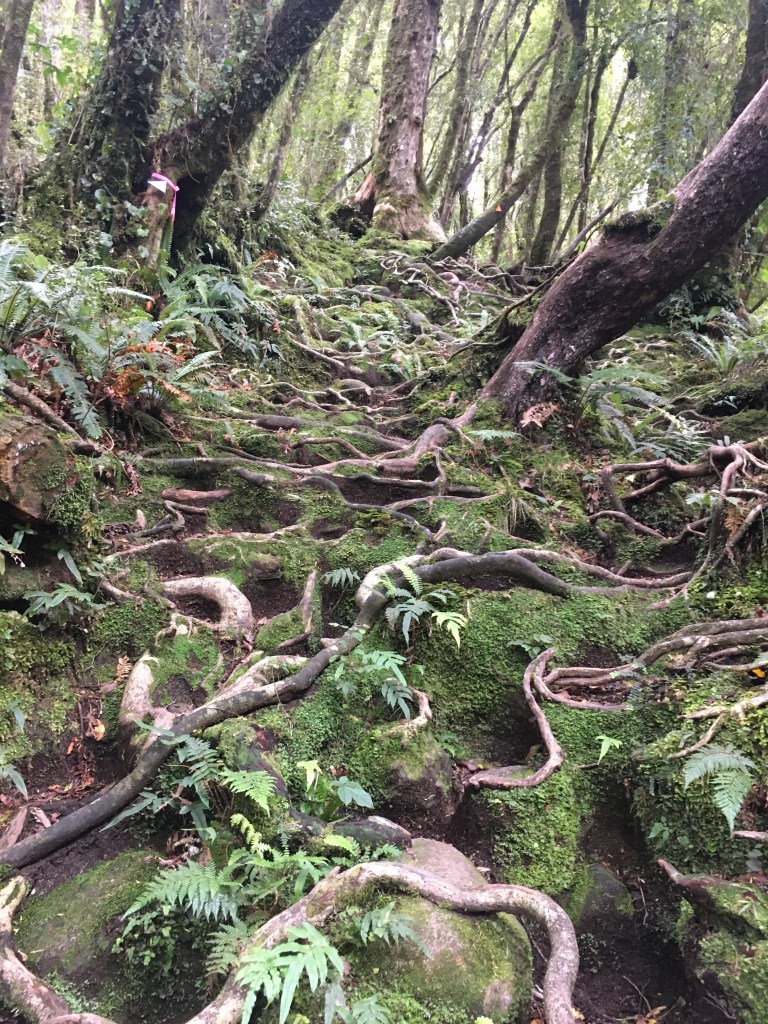
This IS the trail 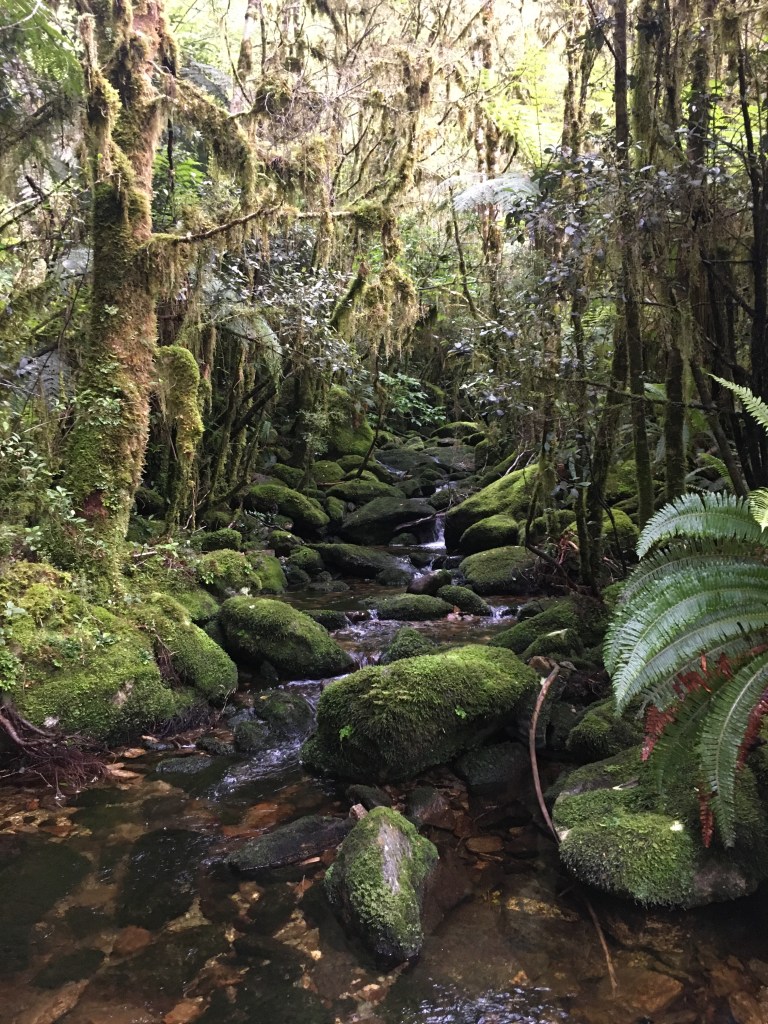
Bron was rewarded with a view from the hanging glacial valley above the Lodge and another waterfall. The overall description of the hike was a resounding “very very hard”.
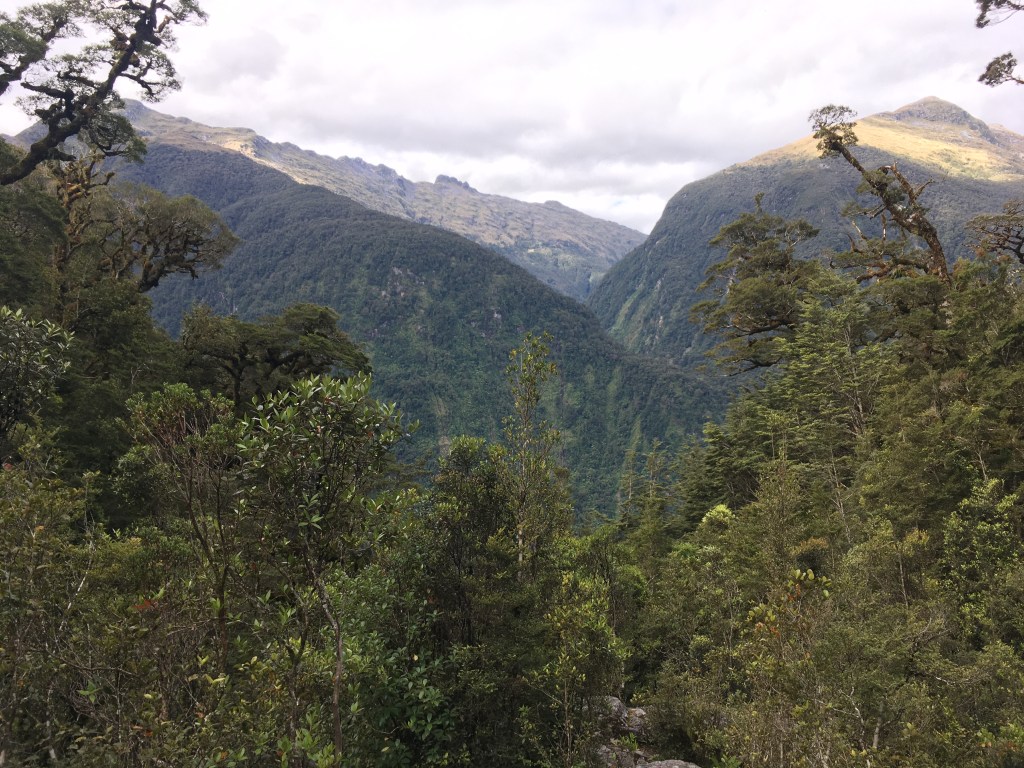
Our second night at the hostel we were alone. The quiet and feeling of solitude is hard to describe. The only sounds were many bird calls – Kea, Weka, and maybe (we’re not totally sure but it sounded like the example) a Kiwi. We were duly impressed by Doubtful Sound.
February 25 – All too soon it was time to get ready to go back to Te Anau. We left on the bus to meet the ferry at West Arm. We had a nice trip back across the Lake to Manapōuri. We visited with another traveller who was from the UK, and got the lowdown on a few other things to see as we continue around NZ. Arriving in Te Anau, we checked into a hotel and spent a portion of the afternoon doing groceries, cooking, and having a nap.
We had a short walk to Ivon Wilson park along the lake shore. It is popular with locals walking their dogs (means lots of dogs for us to visit with as well).
February 26 – A day to get caught up on correspondence, travel arrangements and other things that pop up.
We visited the bird sanctuary in Te Anau. Once thought to be extinct, the centre has a few breeding pairs of Takahē.


Takahē are one of the varieties of flightless birds found in NZ, like the Kiwi. It was interesting to look around and see them up close – the colour in our photo is not vivid enough to do the bird’s plumage justice. It is very interesting to see how much effort is being made to protect these birds. Throughout the Fiordland there were traps and kill rats and stoats (like a weasel) – many, many traps. It is not an exaggeration to say that there are traps every 400 metres along walking tracks to protect the birds from the pest species introduced to NZ with the arrival of the Europeans.
 Brent And Bron Abroad